 Micro Precision
Micro Precision
Micro Precision
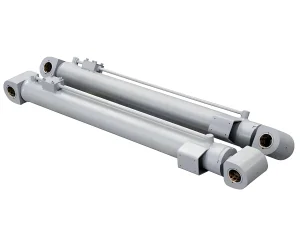
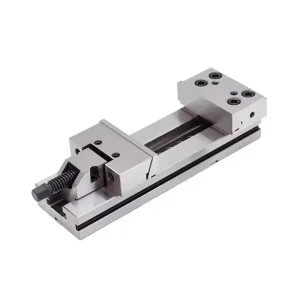
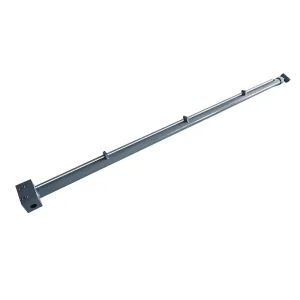
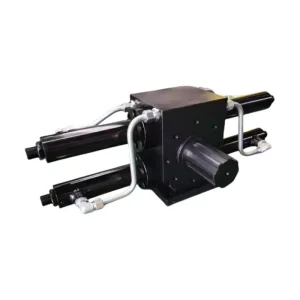
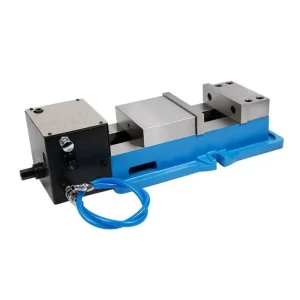
Explore our high-performance mechanical actuators, specialized hydraulic cylinders, and precision modular vices engineered for rigid production environments.
In high-speed CNC milling, 5-axis machining centers, and micro-precision EDM setups, the tool vice is no longer a passive clamp—it is a critical determinant of dynamic rigidity, vibration damping, and sub-micron dimensional repeatability.
High-quality precision tool vices utilize premium-grade FCD-60 or FCD-70 Ductile Iron (Spheroidal Graphite Cast Iron) with a tensile strength exceeding 600–700 MPa. The guide surfaces undergo high-frequency induction hardening to HRC 55–62, minimizing physical wear over millions of clamping cycles while dampening severe chatter during heavy cut machining.
To eliminate "jaw lift" (where the workpiece tilts upward under hydraulic or manual pressure), modern vices integrate an angular force alignment mechanism. A spherical segment transmits horizontal force obliquely downward at a 45-degree angle, ensuring workpiece squareness within 0.005mm (5 microns) per 100mm length.
With automated pallet changers (APC) and flexible manufacturing systems (FMS) becoming standard in global machine shops, ultra-precision modular tool vices feature standardized positioning keyways, zero-point grid alignment, and interchangeable jaw plates to support versatile workholding setups.
| Parameter / Feature | Conventional Machine Vices | High-Precision Tool Vices (MPM Standard) | Hydraulic / Pneumatic High-Force Vices |
|---|---|---|---|
| Material Base | Gray Cast Iron (HT200) | Ductile Iron (FCD-60 / FCD-70) | High-Tensile Alloy Steel / Ductile Iron |
| Parallelism Accuracy | 0.02mm - 0.05mm | ≤ 0.005mm / 100mm | ≤ 0.008mm / 100mm |
| Jaw Lift Prevention | None / Basic Screw Push | Spherical Segment Angle-Lock Mechanism | Active Hydro-Mechanical Pressure Downward |
| Hardness (Bed & Jaws) | HRC 40 - 45 | HRC 58 - 62 Surface Deep-Hardened | HRC 60+ Cryogenically Treated |
| Clamping Automation | Manual Screw Lead Only | Manual / Quick-Change Modular | Automatic Pneumatic / Hydraulic Integration |
| Best Applications | General Rough Milling & Drilling | High-Precision 5-Axis CNC, Jig Grinding | Heavy Duty Milling & High-Volume Production |
Established in 2006, Qingdao Micro Precision Machinery Co., Ltd. has grown from a specialized machining workshop into a globally recognized manufacturer of high-tier hydraulic systems, precision workholding tools, and custom mechanical accessories.
Through continuous innovation, strict quality control systems (ISO 9001:2015 certified), and investment in advanced sub-micron measuring instrumentation, we serve as an official supply chain partner for internationally acclaimed industrial giants including:
Our 15,000 m² state-of-the-art facility integrates the full manufacturing lifecycle under one roof to guarantee strict quality oversight and competitive cost structures:
Established with a commitment to "Precision Manufacturing, Reliable Quality," specializing in custom hydraulic cylinders and high-accuracy machined components. Earned rapid market recognition through rapid prototyping agility.
Introduced advanced CNC automation and high-precision grinding production lines. Expanded the product catalog to include hydraulic valve blocks, specialized machine tool vices, and complex industrial accessories.
Initiated strategic collaboration with Toyota for specialized brake pad bracket tooling. Built long-term distribution and OEM supply relationships across Europe, North America, and Southeast Asia.
Obtained ISO 9001:2015 global quality certification. Developed proprietary zero-point clamping systems and buffer hydraulic cylinders, receiving high acclaim across global machining markets.
Recognized as a National High-Tech Enterprise. Strategic export networks now cover 35+ countries, serving aerospace, medical equipment, semiconductor machinery, and automotive sectors.
Navigating global economic shifts requires procurement leaders to balance strict engineering tolerances, unit costs, dynamic lead times, and supply chain resilience.
Machining facilities across North America and Europe face escalating pressures:
China's advanced precision manufacturing ecosystem offers unparalleled advantages for global buyers:
Clamping delicate thin-walled aluminum and titanium alloy structural brackets. Requires balanced multi-point clamping force to prevent elastic deformation post-machining.
Sub-micron precision holding of PEEK and surgical-grade titanium implants on 5-axis micro-milling machines with zero lubricant contamination risk.
Heavy rough milling of hardened tool steel mold cores (HRC 50+). Vices absorb heavy shock loads while preserving indexing squareness.
Ultra-flat grinding and EDM erosion processes for wafer handling robotics, requiring maximum surface parallelism and non-magnetic options.
Expert insights on selecting, evaluating, maintaining, and customizing high-precision mechanical and hydraulic tool vices for high-end manufacturing operations.
Sub-micron parallelism is maintained through three synchronized design factors: first, the base body is stress-relieved via double-annealing and cryogenic treatment to prevent thermal distortion; second, guideways are precision-ground on specialized surface grinders to tolerances within ≤ 0.005mm; third, an internal spherical segment Angle-Lock system converts horizontal clamping force into a downward vector, counteracting upward jaw tilt during high-feed milling operations.
Mechanical Vices rely on lead-screw leverage and operator manual torque; they are extremely reliable, highly portable, and ideal for toolroom batch work. Hydraulic Vices utilize internal hydro-boosters to deliver massive clamping forces (up to 60 kN) with minimal operator manual torque, essential for heavy rough milling. Pneumatic Vices integrate with shop air systems (6-8 bar) for ultrafast automated clamping cycles, ideal for high-volume automated CNC production cells.
Ductile Iron (FCD-60/FCD-70) contains nodular graphite structures that impart high tensile strength (≥ 600 MPa) and significant yield strength compared to brittle Gray Cast Iron (HT200). This prevents structural deflection or body cracking under high clamping forces, while preserving essential vibration-damping characteristics required for smooth surface finishes.
Yes. We provide complete OEM/ODM customization services. We can custom-engineer keyway dimensions, base plate grid patterns (for 400mm, 500mm, or 630mm machine pallets), jaw width profiles, and integrated zero-point pull-stud locations according to your specific machine tool table standards (DIN, JIS, or ANSI).
Every precision vice undergoes 100% full-check inspection: 1) Hardness verification across bed surfaces using Rockwell testers; 2) CMM coordinate inspection for pitch, keyway squareness, and hole locations; 3) Dial indicator sweep testing on precision granite master plates to certify parallelism and flatness within 0.005mm/100mm; and 4) Dynamic clamping force pressure retention testing.
Daily maintenance requires removing fine metal swarf, wiping down guide surfaces, and applying anti-rust industrial oil. Weekly maintenance includes flushing the internal lead screw or hydraulic ram mechanism with clean solvent and replenishing with high-pressure lithium grease. Jaws should be periodically checked for surface burrs or indentations and dressed via light precision grinding if necessary.
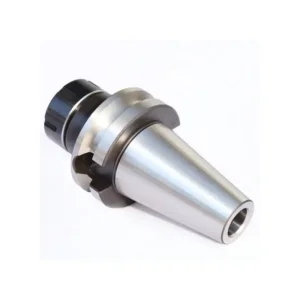
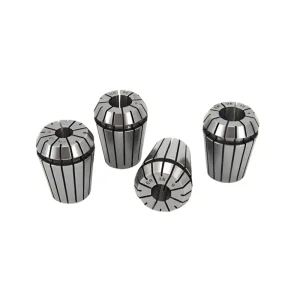
Discover our complete collection of tool holders, ER collets, heavy-duty hydraulic cylinders, and specialized modular vices engineered for high-productivity machining centers.