 Micro Precision
Micro Precision
Micro Precision
When considering the world of forklifts, understanding the various forklift cylinder types is crucial for buyers. Forklift cylinders play a vital role in the functionality and safety of material handling equipment. They are hydraulic components, responsible for lifting and lowering heavy loads with precision. Knowing the different types can enhance performance and efficiency.
Choosing the right forklift cylinder is not just about brand preference. It requires careful consideration of specifications, such as load capacity and material strength. Buyers often overlook these details, leading to suboptimal choices. Each type of cylinder offers distinct features and uses, making it essential to match the right cylinder with specific needs.
Some common types include single-acting and double-acting cylinders. However, buyers should also be aware of the importance of quality and reliability in their selection. A poorly chosen cylinder can lead to operational issues, impacting productivity. Therefore, make informed decisions to ensure safety and efficiency in your operations.
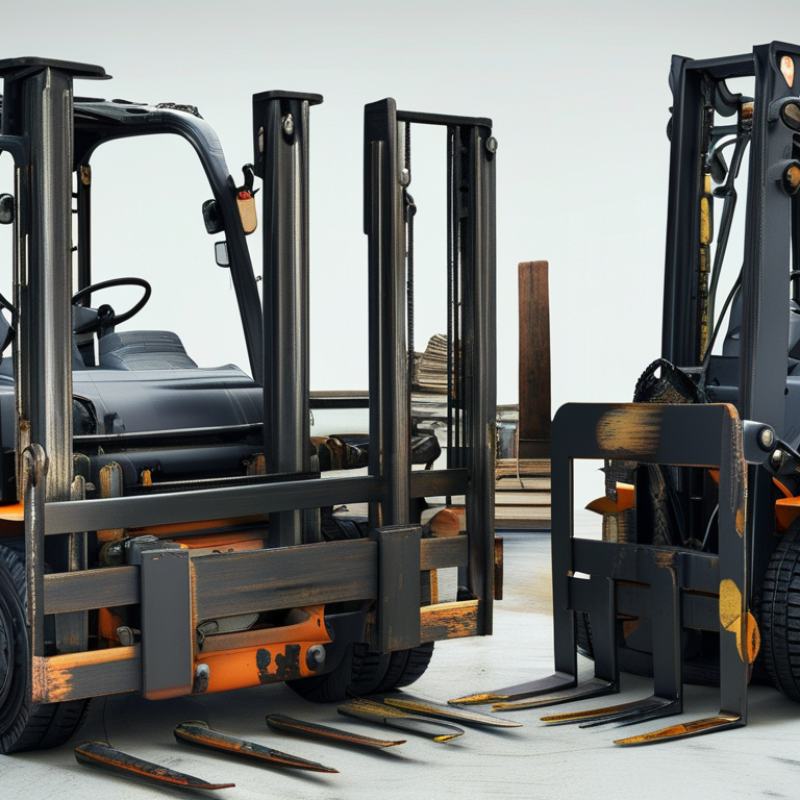
Forklift cylinders play a vital role in material handling. They are essential components that enable lift trucks to raise and lower loads effectively. Each cylinder contributes to the overall efficiency of the forklift, impacting how well it operates in warehouses and construction sites. A reliable cylinder ensures that heavy loads are lifted safely without risking the stability of the forklift.
Understanding the different types of forklift cylinders is crucial for buyers. These cylinders vary in design and functionality, affecting their performance and compatibility with specific forklifts. Some may offer greater lifting capacity, while others are designed for tight spaces. Typically, hydraulic lift cylinders account for most lifting tasks, but there are also tilt and steering cylinders. Knowledge of these options allows buyers to make informed decisions.
There are challenges to consider. Choosing the wrong cylinder can lead to operational inefficiencies. Potential faults may arise if not properly maintained. Regular inspections and repairs can help prevent costly downtime. Buyers should also consider the environment in which the forklift operates. Rough terrains may require more robust cylinder designs to perform reliably. Understanding these nuances is vital for effective material handling.
| Cylinder Type | Function | Applications | Benefits |
|---|---|---|---|
| Hydraulic Cylinder | Provides lifting power | Forklifts, construction equipment | High lifting capacity |
| Pneumatic Cylinder | Air-driven lifting mechanism | Automated systems, assembly lines | Faster operation |
| Telescopic Cylinder | Extended reach for lifting | Telehandler forklifts | Space-saving extended height |
| Double-acting Cylinder | Movement in both directions | Heavy-duty forklifts | Optimal control and efficiency |
| Single-acting Cylinder | Movement in one direction | Light-duty applications | Cost-effective solution |
| Rotary Cylinder | Provides rotational movement | Material handling machines | Versatile motion capabilities |
| Buffer Cylinder | Cushions impact | Loading docks, conveyors | Improved safety |
| Magnetic Cylinder | Uses magnetic force to operate | Material handling, robotics | Reduced wear and tear |
| Friction Cylinder | Resists unwanted movement | Stabilizing equipment | Increased stability |
: Forklift cylinders enable lift trucks to raise and lower loads effectively.
Choosing the wrong cylinder can lead to operational inefficiencies and safety risks.
Regular maintenance prevents costly downtime and major operational issues.
Bore size significantly influences how much weight a cylinder can lift.
Regular inspections are essential to identify leaks and damages before they cause problems.
Steel and aluminum are popular options, each having advantages and disadvantages.
Over-greasing can attract dirt and may lead to performance issues.
Operators should be trained to identify signs of leaks or abnormalities early.
A maintenance log helps track activities and patterns for future reference.
Promoting safety awareness can significantly reduce risks and enhance overall performance.
Forklift cylinders play a crucial role in material handling, acting as the vital components that enable lifting and lowering operations in forklifts. Understanding the various types of forklift cylinders is essential for buyers, as each type serves different functions and applications. The article provides a comprehensive overview of these types, including hydraulic and pneumatic cylinders, emphasizing their respective advantages and usability in different scenarios.
When selecting a forklift cylinder, buyers should consider key specifications such as load capacity, operating pressure, and dimensions to ensure compatibility with their equipment. Additionally, a comparative analysis highlights the fundamental differences between hydraulic and pneumatic systems, aiding in informed decision-making. To maximize longevity and safety, the article also offers maintenance tips that can help operators maintain their forklift cylinders in optimal condition, ultimately enhancing productivity and efficiency in material handling processes.
