
Micro Precision Micro Precision

Top Cylinder Head Manufacturers and Suppliers?

Time:2026-10-23 Author:Sienna
0%

Choosing reliable Cylinder Head manufacturers and suppliers requires more than comparing catalog prices. Material quality, machining accuracy, testing procedures, and delivery consistency directly affect engine performance. A cylinder head must manage combustion pressure, heat transfer, valve movement, and coolant circulation inside a demanding environment.

The market remains significant, although its direction is changing. The International Organization of Motor Vehicle Manufacturers reported global vehicle production of approximately 93.5 million units in 2023. That installed vehicle base supports continuing demand for replacement and remanufactured engine components. At the same time, the International Energy Agency reported nearly 14 million electric car sales in 2023, representing about 18% of global car sales. This shift may reduce some long-term demand for conventional engine parts. It does not eliminate present opportunities, especially in commercial vehicles, industrial engines, motorcycles, and performance applications.

Good suppliers usually provide more than castings. They should demonstrate alloy control, heat-treatment records, dimensional inspection, pressure testing, and traceable batch documentation. ISO 9001 certification can support process confidence, but certification alone proves little about actual product performance. Ask for hardness data, valve-seat details, surface-finish measurements, and sample inspection reports. Small details matter.

Industry forecasts often disagree because they define the market differently. Some include complete assemblies, while others count bare castings only. That limitation deserves attention. This guide compares leading manufacturers and suppliers through engineering capability, geographic coverage, customization, quality assurance, and after-sales support. The best choice depends on the engine, duty cycle, production volume, and risk tolerance—not simply the lowest quotation.
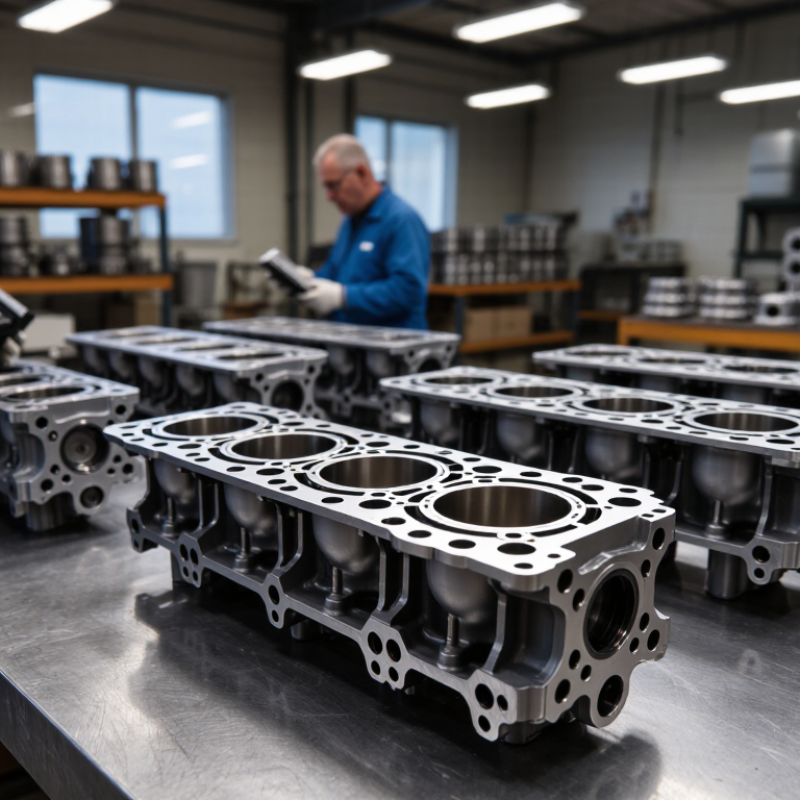
Top Cylinder Head Manufacturers and Suppliers?

Cylinder Head Manufacturers: Roles, Products, and Market Categories

Cylinder Head Manufacturers: Roles, Products, and Market Categories

Cylinder head manufacturers convert engine design into a pressure-resistant, serviceable component. Their work covers casting, heat treatment, machining, inspection, and technical documentation. A typical head contains combustion chambers, intake ports, exhaust ports, valve guides, and coolant passages. Small dimensional errors can cause compression loss, overheating, or uneven valve seating. Experience matters here, especially when controlling porosity around thin walls and complex passages.

The market serves several categories. Original-equipment production prioritizes repeatability, traceability, and high-volume automation. Aftermarket suppliers usually focus on replacement coverage, repair compatibility, and flexible batch sizes. Performance applications demand stronger alloys, improved airflow, and tighter thermal control. According to OICA, global motor-vehicle production reached about 93.5 million units in 2023. That large installed base continues supporting replacement demand, even as powertrain technology changes.

The product range includes aluminum heads, cast-iron heads, complete assemblies, bare castings, and remanufactured units. Engine families also divide demand by passenger vehicles, commercial vehicles, motorcycles, and industrial equipment. The International Energy Agency reported that electric-car sales exceeded 17 million worldwide in 2024. This shift pressures long-term internal-combustion volumes, but it will not remove existing engines quickly. Market boundaries remain imperfect. Some suppliers serve both new production and repair channels, creating overlapping categories. Reports from MarketsandMarkets also identify lightweight materials and advanced manufacturing as continuing development priorities. In practice, published forecasts vary because definitions differ. That is worth checking before comparing market figures.

Key Materials and Manufacturing Processes for Cylinder Heads

Reliable cylinder head sourcing starts with material selection and process control. Cast iron remains valued for strength, wear resistance, and stable performance under high heat. It also adds weight, which can affect vehicle efficiency. Aluminum alloys reduce mass and transfer heat quickly, but they need careful control against distortion and fatigue. Some suppliers use reinforced alloys for demanding applications. That tradeoff matters.

Manufacturing begins with a casting method suited to the design. Sand casting supports complex shapes and moderate production volumes. Permanent-mold casting can improve surface consistency and repeatability. Some facilities use low-pressure casting to reduce porosity around water jackets and combustion chambers. After casting, heat treatment improves hardness and dimensional stability. CNC machining then finishes valve seats, bolt holes, gasket surfaces, and camshaft locations.

Quality checks should happen throughout production, not only at the end. Pressure testing can reveal leaks that visual inspection misses. Dimensional reports verify flatness, bore alignment, and chamber volume. Experienced suppliers also inspect internal passages with imaging or section samples. Still, paperwork is not proof of perfect parts. A sample may pass while a process slowly drifts. One lesson.

When comparing cylinder head manufacturers and suppliers, ask about alloy certificates, casting controls, machining tolerances, and corrective-action records. Practical factory experience matters here. A strong supplier explains limitations clearly instead of promising zero defects. That honesty is useful, even when it complicates purchasing decisions.

Top Cylinder Head Manufacturers and Suppliers? - Key Materials and Manufacturing Processes for Cylinder Heads

A practical comparison of common cylinder-head material systems, manufacturing routes, performance characteristics, and supplier evaluation criteria. The categories below describe established industry practices rather than individual companies or brands.

Manufacturer / Supplier Category Typical Cylinder-Head Material Primary Manufacturing Processes Key Material or Process Advantages Common Engine Applications Typical Quality-Control Requirements Important Sourcing Considerations
High-volume passenger-vehicle component manufacturers Aluminum-silicon alloy
Common families include heat-treatable Al-Si alloys such as A356-type and related automotive grades.
  • Permanent-mold casting
  • Low-pressure casting
  • Gravity casting for selected designs
  • CNC machining of gasket, valve-seat, and cam-bearing surfaces
  • Heat treatment when specified by the alloy and design
Low density, good thermal conductivity, and reduced engine mass. Aluminum alloys also support relatively fast heat transfer from the combustion chamber to the cooling system. Naturally aspirated and turbocharged gasoline engines, light-duty diesel engines, and hybrid powertrains with internal-combustion engines. Dimensional inspection, leak testing, X-ray or computed tomography sampling, porosity control, hardness testing, and verification of valve-seat and guide installation. Confirm alloy specification, casting-capability limits, heat-treatment controls, machining datum strategy, annual capacity, and traceability from melt batch to finished part.
Heavy-duty and commercial-engine component manufacturers Compacted graphite iron
Gray cast iron
Selected designs may use alloyed ductile iron or other engineered ferrous grades.
  • Sand casting or shell molding
  • Core making for internal coolant and intake passages
  • Stress relief or controlled heat treatment
  • Multi-axis CNC machining
  • Surface finishing and precision honing
High stiffness, strong wear resistance, good damping, and robust performance under high cylinder pressure and long operating cycles. Compacted graphite iron generally offers a balance between strength and castability. Heavy-duty diesel engines, agricultural machinery, construction equipment, generators, and long-life industrial engines. Chemical-composition analysis, graphite-morphology inspection, tensile or hardness testing, dimensional checks, pressure testing, and non-destructive examination of critical regions. Evaluate foundry control, core accuracy, metallurgical consistency, machining capacity, capability for large castings, repair policy, and evidence of repeatable pressure-tightness results.
Performance and motorsport cylinder-head specialists High-strength aluminum alloy
Heat-treated alloys are often selected to balance strength, thermal performance, and machining response.
  • High-integrity permanent-mold or low-pressure casting
  • Selective CNC port machining
  • Five-axis machining for complex combustion-chamber geometry
  • Valve-seat and guide installation
  • Port finishing and precision surface machining
Supports complex port geometry, high airflow, reduced mass, and customized combustion-chamber designs. Machining flexibility is useful for low-volume or application-specific programs. Racing engines, high-output road vehicles, specialty vehicles, and limited-production performance engines. Coordinate-measuring-machine inspection, port-volume measurement, combustion-chamber-volume measurement, crack inspection, pressure testing, and detailed surface-finish verification. Review engineering-change capability, porting repeatability, prototype-to-production controls, fixture design, lead time for custom tooling, and support for balancing performance with durability.
Aftermarket replacement-part manufacturers Aluminum alloy
Gray cast iron
Material selection generally follows the original application and service requirements.
  • Sand, permanent-mold, or low-pressure casting
  • Pattern and tooling replication
  • CNC machining of critical interfaces
  • Valve-seat and guide replacement
  • Cleaning, deburring, and final assembly
Broad coverage of legacy engine designs, replacement availability, and compatibility with established service dimensions. Ferrous options provide stiffness; aluminum options reduce weight. Passenger vehicles, light commercial vehicles, older engines, remanufacturing programs, and maintenance-repair markets. Interchangeability checks, pressure testing, dimensional comparison with reference drawings, thread inspection, flatness measurement, and verification of valve-train geometry. Confirm application coverage, casting revision level, included components, surface flatness, valve-seat material, warranty terms, and control of mixed or obsolete part numbers.
Remanufacturing and cylinder-head rebuilding suppliers Existing aluminum or cast-iron cylinder heads that pass inspection; replacement inserts may use hardened alloy steel or sintered materials.
  • Cleaning and visual inspection
  • Crack detection and pressure testing
  • Welding or approved repair of localized defects
  • Surface milling
  • Valve-seat, valve-guide, and thread replacement
Reuses serviceable castings, reduces material consumption, and can provide cost-effective restoration of discontinued or hard-to-source designs. Fleet maintenance, older passenger vehicles, commercial engines, industrial engines, and restoration applications. Pre- and post-repair pressure testing, crack inspection, deck-flatness measurement, guide-to-valve clearance, seat concentricity, spring-seat inspection, and final cleanliness checks. Ask for documented acceptance criteria, repair limits, core-return requirements, replacement-part specifications, cleaning standards, and a clear warranty for repaired areas.
Integrated powertrain suppliers with high-volume machining operations Aluminum alloys for mass-sensitive engines or cast iron / compacted graphite iron for high-load applications.
  • Automated casting-cell production
  • Robotic core handling and trimming
  • Transfer-line or flexible CNC machining
  • Automated washing and deburring
  • In-line dimensional and leak inspection
High production repeatability, standardized process control, scalable output, and efficient integration of casting, machining, inspection, and logistics. High-volume gasoline, diesel, hybrid, and commercial-vehicle engine programs. Statistical process control, automated leak testing, gauge repeatability studies, traceability, first-article approval, process-capability analysis, and layered process audits. Assess production scalability, tooling ownership, capacity-reservation terms, contingency planning, data exchange, change-management procedures, and supply-chain resilience.
Small-batch and prototype cylinder-head manufacturers Aluminum alloys are common because they are suitable for complex geometry, rapid iteration, and relatively low-volume development programs.
  • Sand casting, 3D-printed sand cores, or billet machining
  • Rapid tooling and additive pattern production
  • Five-axis CNC machining
  • Manual or semi-automated port development
  • Prototype assembly and functional testing
Shorter development cycles, flexible design changes, and the ability to produce complex or one-off geometries without high-volume tooling investment. Research engines, motorsport development, prototype vehicles, experimental combustion systems, and low-volume specialty applications. Detailed drawing control, scanning against CAD data, pressure testing, material-certification review, dimensional inspection, and documented engineering-change records. Clarify prototype-to-production transition plans, casting allowance, machining stock, testing responsibility, intellectual-property protection, and expected iteration time.
Specialized supplier for valve-train and cylinder-head subcomponents Cylinder-head body material varies by application; valve seats commonly use wear-resistant ferrous alloys, while guides may use cast iron, bronze, or engineered powder-metal materials.
  • Powder metallurgy for selected inserts
  • Precision turning and grinding
  • Seat and guide installation
  • Valve-seat cutting and concentricity correction
  • Surface treatment where specified
Improves wear resistance, heat transfer, valve sealing, and service life in the areas exposed to repeated impact and high temperature. Gasoline and diesel engines, turbocharged engines, high-duty commercial engines, and rebuilt cylinder heads. Hardness testing, dimensional inspection, seat concentricity, guide clearance, retention-force verification, material-certification review, and functional valve-sealing checks. Verify insert compatibility with the cylinder-head alloy, operating-temperature capability, installation tolerances, machining sequence, and replacement availability.
Technical note: Final material and process selection depends on cylinder pressure, combustion temperature, cooling-system design, engine speed, production volume, cost targets, emissions requirements, and required service life. Exact alloy grades, heat treatments, tolerances, and inspection plans should be confirmed against the applicable engineering drawing and testing standard.

How to Evaluate Cylinder Head Manufacturers and Suppliers

Evaluating cylinder head manufacturers and suppliers requires more than comparing catalog prices. Ask how their heads perform under heat, pressure, and repeated vibration. Experienced suppliers should explain alloy selection, casting controls, heat treatment, and machining tolerances in practical terms. Request inspection records for valve seats, deck flatness, oil passages, and combustion chambers. Clear answers matter.

A reliable supplier can provide material certificates, dimensional reports, pressure-test results, and batch traceability. Check whether these documents match the exact part number and production lot.

Factory visits can reveal storage conditions, calibration practices, and cleanliness around finished surfaces. Small details often expose larger process weaknesses.

However, paperwork is not proof by itself. Compare samples with drawings and test critical dimensions independently. An outside laboratory may be worthwhile for high-volume or high-risk applications.

Evaluate technical support after delivery. Can the supplier investigate a warped deck, a leaking seat, or a repeated installation issue? Look for defined response times, replacement procedures, and installation guidance. Ask about tooling life and change-control records, because unnoticed revisions can affect fit. No supplier is flawless. We may overlook communication quality when chasing a low quote. A short pilot order can test consistency before full production. Record defects, response speed, and corrective actions. These observations provide stronger evidence than a polished sales presentation.

Leading Global Regions for Cylinder Head Production and Supply

Cylinder head production follows engine demand, casting skills, and proximity to vehicle assembly plants. East Asia remains a major production center, supported by dense foundry networks and high-volume machining. China supplies broad ranges of aluminum and iron cylinder heads for passenger, commercial, and industrial engines. Japan and South Korea are recognized for tight process control and advanced inspection. I have seen quality differences emerge from small details, including port geometry, guide alignment, and surface finish. Production speed alone is not enough.

Europe combines established engineering experience with strict emissions and durability requirements. Germany, Italy, France, and Central Europe host specialized suppliers serving performance, agricultural, and heavy-duty applications. Many facilities use automated casting cells, coordinate measuring machines, and thermal cycling tests. Regional suppliers often manage smaller batches with strong documentation. Yet capacity can vary sharply between plants. A capable supplier may still face tooling delays or limited alloy availability.

North America remains important for large-displacement, commercial, and replacement-engine demand. The United States and Mexico benefit from integrated supply chains and nearby machining operations. Mexico often supports cost-sensitive, high-volume programs, while US facilities handle engineering-intensive and aftermarket work. South Asia is gaining attention for export-oriented machining and competitive castings. Buyers should verify traceability, metallurgical reports, leak testing, and delivery history before approval. Site visits can reveal practical issues that certificates miss, including poor storage, mixed components, or inconsistent packaging. Supplier selection is not flawless; forecasts change, and even a strong region can suffer disruptions.

Leading Global Regions for Cylinder Head Production and Supply

Regional vehicle production in 2023, used as a market proxy for cylinder-head demand and supply capacity

Asia and Oceania represented the largest regional automotive manufacturing base in 2023, followed by the Americas and Europe. These regions are therefore the main global centers for cylinder-head manufacturing, machining, sourcing, and aftermarket supply. Africa remains a smaller but developing production and supply market. Values are rounded estimates based on 2023 regional motor-vehicle production data reported by the International Organization of Motor Vehicle Manufacturers (OICA); direct regional cylinder-head output is not publicly reported as a standardized statistic.

Source: OICA, 2023 motor vehicle production statistics.

Applications, Quality Standards, and Supplier Selection Criteria

Top Cylinder Head Manufacturers and Suppliers?

Cylinder heads serve diesel engines, passenger vehicles, motorcycles, compressors, and industrial power units. Each application changes the selection priorities. A heavy-duty diesel head needs thermal stability and strong fatigue resistance. A performance engine may demand precise airflow and excellent valve-seat geometry. Marine and generator applications add corrosion and long-running durability concerns. Material choice matters. Aluminum reduces weight, while cast iron often tolerates severe heat cycles. The best supplier understands the duty cycle, not just the drawing.

Ask for documented quality controls, not attractive claims. ISO 9001 supports repeatable processes. Automotive programs may require IATF 16949 practices and structured approval records. Request material certificates, hardness results, dimensional inspection reports, and pressure-test data. Traceability should connect each head to its batch, tooling, and inspection history. CNC machining requires controlled datums and stable fixtures. Valve guides and seats deserve special attention. Small errors can cause oil consumption, compression loss, or premature wear. Independent testing can strengthen confidence. It also adds time and cost.

Evaluate suppliers through samples, site audits, response speed, and corrective-action discipline. Ask how they manage casting porosity, warpage, tooling wear, and engineering changes. A capable partner explains limits clearly. That honesty is valuable. Compare total cost, including tooling, scrap, packaging, freight, and warranty exposure. Production capacity should match realistic forecasts, not optimistic promises. In practice, a low quotation can hide weak inspection or unstable subcontracting. Supplier scorecards need periodic revision. Early assumptions are often wrong. Require a pilot run before full release, then compare field feedback with inspection data. No supplier is perfect.

FAQS

What does a cylinder head manufacturer produce?

A manufacturer turns engine designs into pressure-resistant components. Products include bare castings, complete assemblies, aluminum heads, cast-iron heads, and remanufactured units. Typical features include combustion chambers, valve guides, ports, and coolant passages.

Which materials are commonly used for cylinder heads?

Aluminum reduces weight and transfers heat quickly. Cast iron provides strength and wear resistance during severe heat cycles. Reinforced alloys may suit demanding applications. Every material involves tradeoffs.

How are cylinder heads manufactured?

Production may use sand casting, permanent-mold casting, or low-pressure casting. Heat treatment improves hardness and dimensional stability. CNC machining finishes valve seats, bolt holes, gasket surfaces, and camshaft locations.

What quality problems can affect a cylinder head?

Casting porosity may cause leaks or weak thin walls. Warpage can affect gasket sealing. Misaligned bores or uneven valve seats may cause compression loss and premature wear. Small errors matter.

How should a buyer evaluate a cylinder head supplier?

Request alloy certificates, hardness results, dimensional reports, and pressure-test data. Check traceability for batches, tooling, and inspection records. Review samples, site conditions, response speed, and corrective actions.

Why is pressure testing important?

Visual inspection may miss internal leaks around coolant passages. Pressure testing can expose hidden defects before installation. However, one passing sample does not prove stable production. Processes can drift.

Which cylinder head suits different applications?

Heavy-duty diesel engines need thermal stability and fatigue resistance. Performance engines may require precise airflow and valve-seat geometry. Marine, generator, and industrial units may need corrosion resistance and long-running durability.

What costs should be included when comparing suppliers?

Compare tooling, machining, scrap, packaging, freight, inspection, and warranty exposure. A low quotation may hide unstable subcontracting or weak inspection. Pilot production can reveal problems earlier. Assumptions sometimes fail.

How can a buyer reduce production risk?

Start with a pilot run before full release. Compare inspection data with field feedback. Recheck supplier scorecards regularly, because capacity forecasts and early quality judgments may be wrong. No supplier is perfect.

Conclusion

This article provides a practical overview of Cylinder Head manufacturers and suppliers, explaining their roles, product categories, and position within the automotive, industrial, marine, and power equipment markets. It introduces the main materials used in cylinder head production, including aluminum alloys and cast iron, while outlining common manufacturing processes such as casting, machining, heat treatment, inspection, and surface finishing. These factors directly influence product strength, thermal performance, durability, and cost.

The article also explains how to evaluate suppliers by examining production capacity, engineering expertise, quality control systems, certifications, delivery reliability, customization services, and technical support. It reviews major global production regions and highlights how regional capabilities can affect supply stability and communication. Finally, it discusses application-specific requirements, relevant quality standards, testing procedures, and practical supplier selection criteria to help buyers choose a dependable partner that can provide consistent Cylinder Head performance and long-term value.

Sienna

Sienna

Sienna is a skilled marketing professional with a deep expertise in our company’s core products and services. With a passion for innovation and detail, she plays a pivotal role in crafting insightful blog posts that not only highlight the unique features of our offerings but also provide valuable......