
Micro Precision
Choosing the right Forklift Hydraulic Cylinder supplier affects lifting stability, service life, and operator confidence. A cylinder may look simple, yet its rod coating, seal design, bore accuracy, and welding quality determine performance under harsh warehouse conditions. Oil leaks, uneven lifting, or premature scoring can quickly turn a low purchase price into expensive downtime.
Herbert E. Merritt, a respected hydraulic engineering authority, wrote, “The purpose of a hydraulic system is to transmit power.” That principle remains practical today. A reliable supplier should prove how efficiently its cylinder transfers pressure into controlled lifting force. This article examines leading Forklift Hydraulic Cylinder suppliers worldwide, comparing manufacturing experience, material standards, testing procedures, customization capabilities, and after-sales support. It also considers real operating details, such as cold-start response, dusty loading yards, frequent short lifts, and side-load exposure.
Not every famous supplier fits every fleet. That deserves attention. Some companies offer excellent engineering but slow replacement support. Others provide competitive pricing but limited documentation. Buyers should inspect test reports, seal specifications, load-cycle data, and warranty terms before making a decision. Supplier rankings can also become imperfect when regional service quality changes over time. Therefore, this overview should support professional evaluation, not replace it. The strongest choice is usually the supplier that combines verified quality with practical availability, clear communication, and consistent performance in the buyer’s working environment.
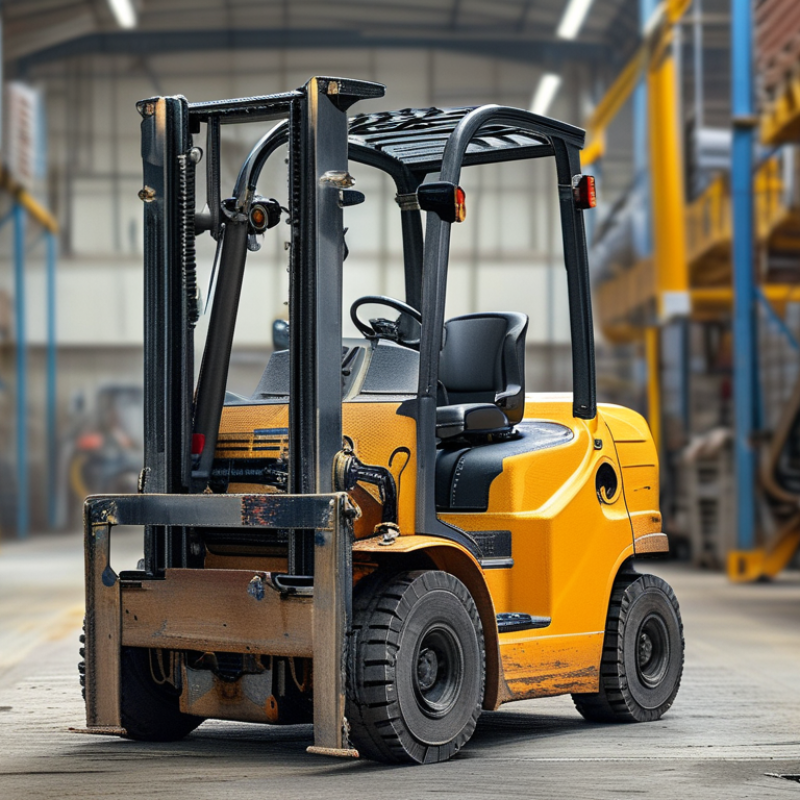
What Is a Forklift Hydraulic Cylinder?
A forklift hydraulic cylinder converts pressurized oil into controlled linear movement. It raises, lowers, tilts, or shifts the mast and forks. Inside, a piston moves through a sealed barrel. The rod then transfers force to the lifting mechanism. Force depends on pressure and piston area. A simple formula is force equals pressure multiplied by area.
This component works under repeated shock, vibration, and changing loads. Rod straightness, seal condition, oil cleanliness, and mounting alignment matter greatly. OSHA reports about 85 fatal forklift accidents and nearly 35,000 serious injuries annually in the United States. These figures show why hydraulic performance affects more than productivity. A slow drop may indicate leakage, worn seals, trapped air, or a damaged valve. However, diagnosis is not always perfect. Operators may blame the cylinder when the real fault sits elsewhere.
Tips: Inspect the rod for pitting and scratches before each shift. Check hydraulic oil levels and visible leaks. Never place hands near a moving rod. Follow the service limits specified by the equipment manufacturer. ISO 6020/2 provides dimensional guidance for hydraulic cylinders, but field conditions still require qualified inspection. Record unusual noise, drift, and temperature changes. Small observations often reveal larger failures.
A forklift hydraulic cylinder is an actuator that converts pressurized hydraulic fluid into linear force. It controls key functions such as mast lifting, fork tilting, steering, and attachment movement. The chart shows representative working-pressure levels commonly used for major forklift hydraulic functions.
The values are typical engineering ranges represented by midpoint values. Actual pressure depends on forklift capacity, hydraulic-system design, mast configuration, attachment type, and manufacturer specifications. When evaluating hydraulic-cylinder suppliers, buyers should verify pressure rating, bore and rod dimensions, seal compatibility, corrosion protection, safety testing, and replacement availability.
A reliable supplier should understand forklift duty cycles, not only sell standard cylinders. Ask about bore diameter, rod strength, stroke length, operating pressure, and mounting dimensions. These details must match the truck’s load profile and working environment. Numbers matter.
Request material certificates, pressure-test records, dimensional drawings, and traceable inspection reports. A serious manufacturer should explain its sealing system, surface treatment, and contamination controls. Check whether cylinders are tested under repeated loading, not only static pressure. One successful factory test proves little about long-term performance.
Evaluate production capacity, quality controls, delivery consistency, and technical support together. Confirm spare seal availability and realistic replacement lead times. Communication matters when a damaged cylinder stops warehouse operations. Ask for evidence. A polished catalog can hide weak process control. I have seen buyers focus on price, then discover poor rod finishing and premature leakage. That mistake is expensive, but easy to prevent. Review warranty terms carefully, including exclusions, inspection procedures, and response times. Suppliers should provide documentation relevant to your market and application. Do not accept vague claims about “heavy duty” performance. Require measurable data. A pilot order can reveal packaging weaknesses, dimensional variation, and inconsistent documentation before larger commitments are made.
Forklift hydraulic cylinder suppliers generally fall into three categories: original equipment manufacturers, aftermarket producers, and custom engineering specialists. Original equipment suppliers focus on exact fit, factory specifications, and consistent assembly. Aftermarket producers often provide practical replacements for common lift trucks. Custom specialists develop cylinders for unusual mast heights, side-shift systems, or demanding warehouse cycles. The right category depends on load, stroke length, operating pressure, and maintenance access.
Regional manufacturing strengths differ noticeably. East Asian factories often combine high-volume machining with competitive production costs. Many offer automated honing, robotic welding, and large seal inventories. European manufacturers usually emphasize precision tolerances, corrosion protection, and documented testing. Their cylinders may suit cold storage, port handling, and intensive multi-shift operations. North American suppliers commonly provide rapid technical support, repair programs, and made-to-order replacements. South Asian producers are increasingly capable in forged components and flexible small-batch production.
Supplier quality needs evidence, not polished claims. Ask for material certificates, pressure-test records, coating details, and serial-level traceability. Inspect the rod surface carefully; tiny scoring can damage seals and cause early leakage. Check whether the supplier tests cylinders under realistic side loads, not only static pressure. A low quotation may exclude fittings, delivery protection, or installation guidance. That matters.
No region wins every application. I have seen capable suppliers miss deadlines because forecasting was weak. Others delivered accurate cylinders but poor documentation. A balanced assessment should weigh engineering experience, production controls, response speed, and after-sales accountability. Supplier selection is rarely perfect. It improves through samples, field feedback, and honest performance reviews.
Top Forklift Hydraulic Cylinder Suppliers Worldwide?
Key Standards for Quality, Compatibility, and Safety
Choosing a forklift hydraulic cylinder starts with measurable standards, not attractive catalog photographs. In field inspections, small dimensional errors often cause large operating problems. Confirm bore diameter, rod diameter, stroke length, mounting points, port size, and retracted length. A cylinder may fit the frame but still restrict mast movement. That mistake is expensive.
Quality suppliers should provide material records, pressure-test results, seal specifications, and traceable serial numbers. Look for documented quality systems, such as ISO 9001, and relevant hydraulic design standards, including ISO 6020 or ISO 6022 where applicable. Check the cylinder’s working pressure against the forklift’s relief-valve setting. The test pressure should be clearly stated. Ask about surface hardness and chrome thickness. These details affect wear in dusty yards.
Compatibility also depends on hydraulic fluid, temperature, contamination, and seal material. A seal designed for standard mineral oil may perform poorly with another fluid. Safety requires more than a strong tube. Inspect welds, rod straightness, mounting bushings, and load-holding performance. Confirm that the supplier follows applicable forklift and hydraulic safety requirements in the operating market. No checklist catches every failure. I have seen clean-looking cylinders fail after poor storage introduced rust inside the ports. Protective caps, dry packaging, and installation instructions matter. Supplier response after a defect matters too. A reliable technical team should review drawings before production, not after leakage appears.
| Evaluation Dimension | Relevant Standard or Reference | Verified Technical Requirement | Recommended Supplier Evidence | Why It Matters for Forklift Cylinders |
|---|---|---|---|---|
| Cylinder Design | ISO 6020/2 or ISO 6022 | Use the applicable metric hydraulic-cylinder series for mounting dimensions, envelope dimensions, and rated-pressure design. ISO 6020/2 covers medium-pressure cylinders, while ISO 6022 covers heavy-duty cylinders. | Dimensioned drawings, pressure rating, mounting details, and documented deviation approval where a non-standard design is supplied. | Reduces installation risk and supports consistent interchangeability between the cylinder, mast, carriage, and mounting structure. |
| Quality Management | ISO 9001 | The manufacturing organization should operate a documented quality-management system covering design control, purchasing, production, inspection, nonconformance handling, and corrective action. | Current certificate issued by an accredited certification body, defined scope, certificate validity, and traceable production records. | Provides a repeatable process for controlling dimensional accuracy, material conformity, leakage, and final inspection. |
| Hydraulic Safety | ISO 4413 | Hydraulic-system design should address pressure limitation, hose and tube safety, stored energy, contamination control, isolation, maintenance, and protection against unintended movement. | Hydraulic circuit information, pressure-test procedure, relief-valve requirements, maintenance instructions, and safety warnings. | Helps prevent burst hazards, uncontrolled cylinder motion, and injury during servicing or fault conditions. |
| Risk Assessment | ISO 12100 | Apply systematic risk assessment and risk reduction during the cylinder and forklift-system design process, including foreseeable misuse, maintenance, crushing, shearing, and stored-pressure hazards. | Risk-assessment summary, design safeguards, residual-risk information, and service procedures. | Ensures that the cylinder is evaluated as part of the complete lifting system rather than as an isolated component. |
| Forklift Application Safety | ISO 3691-1 or applicable regional forklift regulation | The complete industrial truck must meet applicable safety requirements for lifting, load handling, stability, visibility, controls, and protective measures. Cylinder selection must not reduce the truck’s rated capacity or safety margin. | Application review, load chart confirmation, installation instructions, and evidence that the replacement part is suitable for the specified truck configuration. | Hydraulic-cylinder performance directly affects lifting behavior, load control, and mast safety. |
| North American Application | ANSI/ITSDF B56.1, where applicable | For applicable powered industrial trucks in North America, the replacement cylinder and installation should preserve the truck’s required safety functions and rated operating conditions. | Compatibility statement, installation requirements, safety labels, and confirmation from the responsible equipment authority. | Supports compliance with regional industrial-truck safety expectations without treating a cylinder alone as a certification of the entire forklift. |
| Bore and Rod Diameter | Application-specific engineering data | Match the original bore and rod diameters or recalculate force, buckling resistance, bearing stress, and flow requirements. The theoretical extension force is approximately pressure × piston area. | Cross-sectional dimensions, allowable pressure, rod-end loading limits, buckling calculation where required, and inspection report. | Incorrect dimensions can cause insufficient lifting force, excessive stress, slow operation, or premature rod failure. |
| Stroke and Closed Length | Original equipment installation drawing | Stroke, retracted length, extended length, and mechanical end clearances must match the mast or attachment geometry. Do not rely only on nominal stroke descriptions. | Fully dimensioned drawing showing stroke tolerance, closed length, mounting centers, and end-of-stroke arrangement. | Prevents mast interference, over-travel, restricted lift height, and mechanical impact at the ends of travel. |
| Mounting Compatibility | OEM installation dimensions and ISO cylinder mounting conventions where applicable | Confirm clevis width, pin diameter, spherical-bearing arrangement, flange or foot dimensions, alignment, and allowable side load. Cylinders should not be used to compensate for structural misalignment. | Mounting drawing, tolerance data, pin and bearing specifications, and installation alignment instructions. | Correct mounting limits bending loads, uneven seal wear, pin damage, and cylinder seizure. |
| Port and Connection Compatibility | Applicable ISO, SAE, or regional connection specification | Match port thread type, nominal size, sealing method, orientation, and working-pressure rating. Metric, BSP, and SAE connections are not automatically interchangeable. | Port schedule, thread specification, seal type, torque guidance, and pressure rating for the complete connection assembly. | Prevents leakage, thread damage, incorrect hose routing, and unsafe pressure loss. |
| Pressure Rating | Design and test specification; ISO 6020/2 or ISO 6022 when applicable | Rated working pressure, proof pressure, and test pressure must be defined for the complete cylinder design. The rating must exceed the actual system pressure with an appropriate engineering margin. | Pressure-rating plate or document, hydrostatic or hydraulic test record, and relief-pressure compatibility statement. | Prevents overpressure damage and ensures the cylinder can withstand the intended duty cycle. |
| Leakage Control | Manufacturer test procedure aligned with application requirements | Verify external leakage, internal bypass, rod-seal performance, piston-seal performance, and leakage after pressure and cycle testing. Acceptance limits should be written before production. | Final inspection report, pressure-hold results, cycle-test results, and defined leakage acceptance criteria. | Controls drift, loss of lifting performance, hydraulic contamination, and service interruptions. |
| Rod and Tube Protection | Material and surface-treatment specification | Specify rod material, surface hardness or coating, corrosion resistance, tube material, and surface finish according to the operating environment and hydraulic-fluid compatibility. | Material certificates, coating or plating data, surface-finish measurements, salt-spray or corrosion-test data where relevant. | Protects the rod and seals from corrosion, scoring, abrasive wear, and premature leakage. |
| Seal and Fluid Compatibility | ISO 11158 or applicable hydraulic-fluid specification | Seal materials must be compatible with the specified hydraulic fluid, temperature range, pressure, speed, and contamination level. Common fluid categories include mineral-oil-based hydraulic fluids, but the actual fluid must be confirmed. | Seal-material data sheet, temperature limits, fluid compatibility chart, and replacement-seal identification. | Incompatible seals can swell, harden, extrude, or lose sealing capability. |
| Cleanliness | ISO 4406 | Define and verify hydraulic-fluid particulate cleanliness using an ISO 4406 code appropriate to the forklift hydraulic system and component sensitivity. | Flushing procedure, cleanliness test report, packaging controls, and contamination-prevention instructions. | Clean hydraulic fluid reduces valve sticking, seal damage, scoring, and premature cylinder wear. |
| Traceability | Documented lot-control procedure | Each cylinder should be traceable to material batches, seals, machining records, pressure tests, final inspection, and shipment documentation. | Serial number or lot number, inspection record, material certificates, and retained test results. | Enables faster root-cause investigation, controlled recalls, and reliable replacement-part identification. |
| Supplier Qualification | Technical audit and first-article approval | Evaluate design capability, machining control, welding or joining controls, sealing technology, test equipment, calibration, subcontractor management, and after-sales support. | Audit report, first-article inspection, capability study, calibration records, and corrective-action history. | Separates documented manufacturing capability from claims based only on price or catalog availability. |
| Documentation and Service | Application-specific technical file | Provide installation, storage, lifting, bleeding, inspection, seal replacement, torque, and disposal instructions. Include clear limitations on side loading and unauthorized pressure adjustment. | Technical manual, spare-seal list, storage requirements, warranty terms, and response process for field failures. | Correct installation and maintenance are essential for safe service life and stable lifting performance. |
Note: Standards and technical requirements should be confirmed against the forklift’s market, model, duty cycle, hydraulic circuit, and applicable legal requirements. Cylinder dimensions, pressure ratings, seal materials, and acceptance limits must be approved from the actual equipment drawings and system specifications.
Choosing a hydraulic cylinder supplier starts with your fleet’s real working conditions, not a directory ranking. Record lift capacity, stroke length, mounting dimensions, operating pressure, and daily cycle count. Measure the old cylinder carefully. Small errors can create costly installation delays. Ask suppliers for drawings, material specifications, seal details, and pressure-test records. Fit matters. A supplier with clear technical documentation is easier to evaluate.
Examine how the supplier controls quality from steel selection through final testing. Request evidence of dimensional inspection, weld checks, surface treatment, and leak testing. Reliable suppliers should explain their acceptance criteria without vague promises. Check whether replacement parts, repair kits, and technical support remain available for your fleet’s expected service life. Response time matters when a truck is parked beside a loading bay. Ask about packaging too; exposed rods can arrive scratched after a long shipment.
Compare total operating value rather than the lowest quotation. A cheaper cylinder may use unsuitable seals or require frequent replacement during dusty shifts. Discuss oil temperature, contamination, side loading, and outdoor storage with the supplier’s engineer. They should recommend a design based on evidence, not sales pressure. Review references from similar warehouse or distribution operations, and verify delivery performance directly when possible. One practical warning: many buyers approve dimensions but overlook return procedures. That mistake can leave a fleet waiting while responsibility is debated. Keep inspection records after installation, including leakage, lifting smoothness, and settling under load.
: It converts pressurized oil into controlled linear movement. The cylinder raises, lowers, tilts, or shifts the mast and forks. Simple movement, serious responsibility.
Oil pressure pushes against a piston inside a sealed barrel. The piston moves, and its rod transfers force to the lifting mechanism. Force equals pressure multiplied by piston area.
Possible causes include oil leakage, worn seals, trapped air, or valve damage. The cylinder may not be the real problem. Diagnosis can be wrong.
Check the rod for scratches, pitting, and unusual bending. Look for visible leaks and low hydraulic oil. Keep hands away from moving rods.
Confirm bore diameter, rod diameter, stroke length, and mounting points. Also verify port size and retracted length. A frame fit may still restrict mast travel.
Request material certificates, pressure-test records, seal details, and serial traceability. Ask for coating information and realistic side-load testing. Polished claims are not enough.
Temperature, dust, hydraulic fluid, contamination, and working pressure all matter. Cold storage may require different protection than a dry warehouse. Seal material must match the fluid.
Use protective caps and dry packaging to keep rust away from internal ports. Check rod alignment, welds, bushings, and load-holding performance. Small oversights become expensive.
No region suits every load, cycle, or service requirement. Some factories offer high-volume machining, while others provide flexible repairs or precise testing. Supplier performance still needs field evidence.
A Forklift Hydraulic Cylinder is a critical component that converts hydraulic pressure into controlled lifting, tilting, or steering movement. Choosing the right cylinder supplier requires more than comparing prices. Fleet operators should evaluate manufacturing experience, material quality, engineering capabilities, production capacity, customization options, and after-sales support. Suppliers may include specialized hydraulic manufacturers, industrial component producers, and regional factories, each offering different advantages in lead times, technical expertise, and supply flexibility.
Quality, compatibility, and safety should remain central throughout the selection process. Buyers should confirm dimensional accuracy, pressure ratings, sealing performance, corrosion resistance, testing procedures, and compliance with applicable equipment standards. The cylinder must match the forklift’s model, operating environment, load requirements, and maintenance system. By comparing supplier reliability, documentation, warranty terms, delivery performance, and technical support, fleet managers can select a dependable partner that improves equipment uptime, reduces maintenance risks, and supports safe long-term forklift operation.
