 Micro Precision
Choosing the right Cylinder Piston Rod is not just a matter of matching its diameter to a drawing. The rod must withstand force, side loading, repeated cycles, and the environment around the cylinder. A polished rod may look robust on a workbench, yet corrosion, scoring, or a poor fit can shorten its service life. Small details count.
A useful selection principle comes from a hypothetical cylinder-design specialist, engineer Alex Morgan: “Choose the rod for the load, motion, and environment—not appearance alone.” This is an illustrative quote, not a verified statement from a real expert. The principle is practical: check the cylinder’s bore and stroke, operating pressure, mounting arrangement, and expected cycle rate before comparing rod materials or coatings. Also consider the rod’s exposed length. A long, slender rod can buckle under compression if its dimensions and support are unsuitable. That risk is easy to overlook.
This guide explains how to assess these factors, compare common finishes, and spot details worth confirming with a supplier. Measurements from an actual installation can reveal problems that a catalog description cannot. Still, field conditions are not always predictable. Dust, moisture, and misalignment may change the decision. Use manufacturer specifications, and verify the selection against the real duty cycle before ordering.
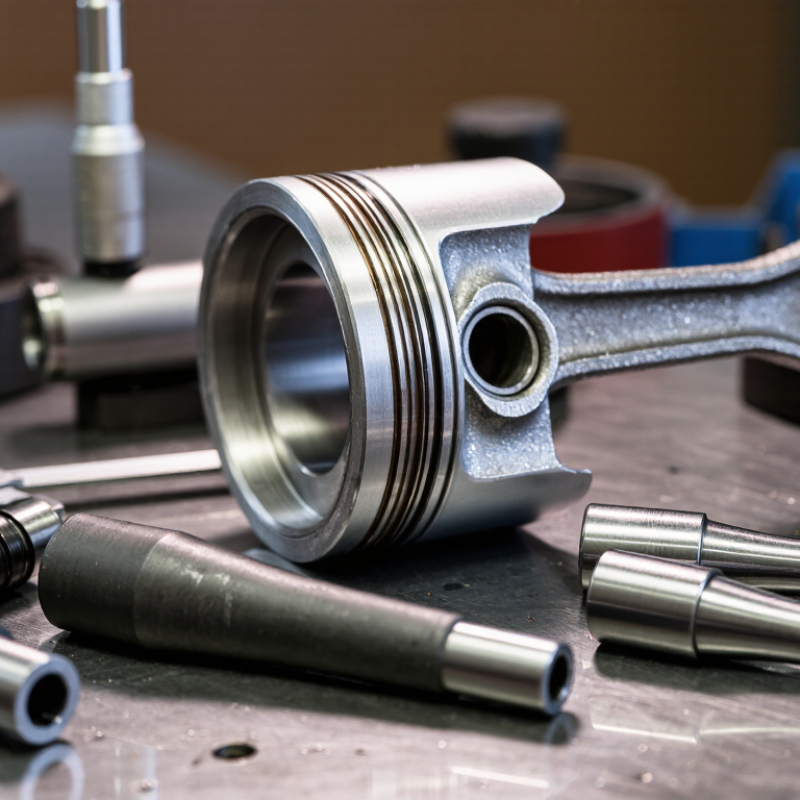
A cylinder piston rod carries the piston’s force to the machine and guides movement through each stroke. Its diameter, length, and end connection must match the cylinder and the actual load. A rod that looks substantial may still bend if it is long and poorly supported. Check peak compression, side loading, and mounting alignment, not just the rated force. Small details matter.
Start with the rod diameter and stroke length, then confirm the required material and surface finish. A smooth, hard surface helps protect the seal as the rod moves in and out. In a dusty workshop, even fine grit can score that surface and cause leakage. Corrosion resistance also matters when equipment faces moisture or cleaning fluids. The coating must suit the seal and operating environment.
Check the rod’s straightness, thread dimensions, and attachment style against the cylinder drawing. Measure twice. A mismatch at the rod end can create looseness or unwanted side force. I would also review operating speed and duty cycle; a rod chosen from static load alone may disappoint in repeated use. It is easy to overfocus on diameter. Recheck the whole assembly before specifying a replacement.
Use this guide to compare common selection factors. Values are typical reference ranges, not universal requirements; confirm the final specification against the cylinder design, load, operating environment, and applicable standards.
| Selection Factor | Typical Specification or Option | Why It Matters | Practical Selection Guidance |
|---|---|---|---|
| Rod function | Transfers the piston’s force to the external load and moves through the cylinder head and seals. | The rod carries axial force and may also experience bending, side loading, and impact. | Determine the maximum push and pull loads, mounting arrangement, stroke, speed, and any side load before choosing a diameter. |
| Rod diameter | Selected to suit the cylinder design; industrial sizes commonly range from approximately 12 mm to 100 mm or more. | Diameter affects tensile capacity, bending stiffness, buckling resistance, and seal size. | Check compressive buckling at the full extended stroke, especially for long rods or end-loaded applications. Do not size by force alone. |
| Base material | Common choices include medium-carbon steel and quenched-and-tempered alloy steel. | Material strength and toughness influence resistance to yielding, fatigue, and impact. | Choose the material and heat-treatment condition from the required load, rod diameter, operating temperature, and supplier-certified mechanical properties. |
| Surface coating | Hard chrome plating is widely used; other coating systems may be selected for specific wear or environmental needs. | The surface runs through the rod seal and is exposed to wear, moisture, and contaminants. | Specify coating type, thickness, adhesion, and finish together. A hard-chrome layer around 20–30 μm is a common reference, but design requirements vary. |
| Surface hardness | Hard-chrome rod surfaces are often specified around 800–1,100 HV, depending on coating and test method. | A suitable surface hardness helps resist abrasion and seal-related wear. | Confirm the hardness requirement and measurement method with the coating supplier; do not compare values taken using different test methods as if they were identical. |
| Surface roughness | A polished sealing surface commonly has an Ra value in the approximate range of 0.1–0.3 μm. | Surface texture affects seal friction, leakage, and wear. | Use the seal manufacturer’s recommended finish and measurement direction. A surface that is too rough or too smooth can both shorten seal life. |
| Diameter tolerance | Specified to the cylinder and seal design; f7 or h8 are examples used in some rod applications. | Rod size and roundness influence seal fit, guidance, and leakage control. | State the nominal diameter, tolerance class or limits, and roundness requirement on the drawing. Verify compatibility with the selected seals and bearings. |
| Straightness | Set according to rod length, guidance, and application; a value such as 0.1 mm per metre may be used as a reference in some designs. | Excessive runout can increase side loading, guide wear, and seal wear. | Define how straightness is measured and whether the requirement applies to the finished, coated rod. Use tighter limits where guidance or alignment is critical. |
| Corrosion resistance | Options include protective coatings, corrosion-resistant materials, or additional surface treatments. | Water, salt, chemicals, and outdoor exposure can damage the rod surface and lead to pitting or seal failure. | Describe the actual environment, including washdown and salt exposure. Specify a suitable coating system and test requirement rather than relying on a general “corrosion-resistant” label. |
| End connection | Common arrangements include threaded ends, clevis connections, and spherical or bearing-style joints. | The connection transfers load and determines how the rod accommodates movement and alignment. | Confirm thread dimensions, engagement length, joint articulation, and alignment. Avoid using the rod end to compensate for substantial cylinder misalignment. |
| Operating conditions | Consider pressure, speed, duty cycle, temperature, contamination, and exposure to impact or vibration. | These conditions affect fatigue life, coating performance, seal life, and corrosion risk. | Provide the full operating profile when requesting a rod specification; a rod suitable for a clean indoor system may not suit a severe outdoor application. |
It transfers piston force to the machine and guides movement during each stroke. Small part, big job.
Check rod diameter, usable length, thread size and pitch, and end-fitting dimensions. Measure the cylinder retracted and extended. Stroke is not overall length.
No. Match the rod to the cylinder’s bore, stroke, pressure, seals, and mounting details. A matching diameter alone proves little.
Review peak compression, side loading, alignment, speed, and duty cycle. Pressure alone does not determine rod capacity.
Longer unsupported rods are more likely to buckle under compression. In an ideal example, doubling length reduces the estimated critical load by about four times. Not a safe working limit.
A smooth, hard surface helps protect the seal. Moisture, abrasive dust, and washdown may affect material and coating choices. Fine grit can score a rod.
Compare thread engagement, pin diameter, clevis width, and mounting spacing with the cylinder drawing. Confirm the joint moves freely through its full arc.
Check the gland and seals for scoring or uneven wear. Also verify straightness and alignment. I used to focus only on diameter; that missed important details.
Compare the assembly with service records or a cylinder drawing. If details remain unclear, ask a qualified technician to identify the correct rod. Don’t force a near match.
Choosing the right Cylinder Piston Rod starts with understanding its role in converting hydraulic or pneumatic pressure into linear movement. Consider the cylinder’s basic specifications, including bore size, stroke, operating pressure, and connection type. Then assess the working environment and expected load: the rod must withstand the required force, movement frequency, and any side loading without excessive bending or wear.
Compare suitable rod materials and surface treatments based on strength, corrosion resistance, and exposure to moisture, chemicals, dust, or temperature changes. Confirm the rod’s diameter, length, threads, and mounting details match the cylinder and connected equipment. Finally, consider how easily the rod can be inspected and maintained, and whether its design can support the expected service life. A careful comparison of these factors helps ensure reliable operation, reduce premature wear, and select a rod suited to the application.
