
Micro Precision
Choosing the China top 10 Bucket Cylinder suppliers requires more than comparing factory prices. Buyers must examine bore accuracy, rod coating, sealing systems, welding quality, and field support. A cylinder may look identical in a catalog. Its performance can differ sharply under dust, shock loads, and cold starts.
Market evidence shows why this component deserves closer attention. Grand View Research estimates that the global hydraulic cylinders market will continue expanding through 2030, supported by construction, mining, agriculture, and material-handling equipment. Fortune Business Insights also identifies rising equipment automation and infrastructure investment as important demand drivers. These reports describe broad market movement, not individual supplier quality. That distinction matters.
Walt Boyes, a longtime instrumentation and hydraulics author, explains, “Hydraulics is the use of liquids to transmit power.” A Bucket Cylinder turns that transmitted power into visible movement. It raises the loader arm, tilts the attachment, and absorbs repeated impact. Small seal damage can soon become slow movement, oil leakage, and costly downtime.
This guide evaluates ten Chinese suppliers through practical criteria. These include manufacturing experience, pressure testing, material traceability, customization, export history, certifications, and after-sales communication. Supplier websites provide useful clues, but they are not complete proof. Independent inspection, sample testing, and reference checks remain necessary.
No ranking is perfect. Application conditions vary. A supplier serving excavators may not suit compact loaders. Buyers should confirm working pressure, stroke length, mounting dimensions, operating temperature, and seal compatibility before ordering. The strongest choice is not always the cheapest one. It is the supplier that delivers stable performance when the work becomes harsh.
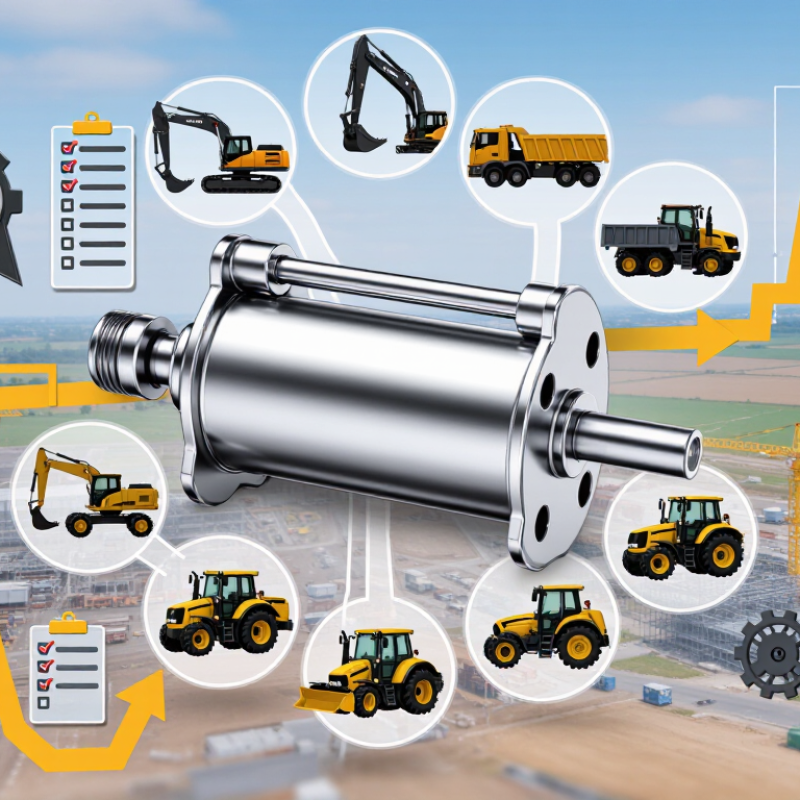
China’s bucket cylinder market is moving toward higher pressure, tighter tolerances, and faster OEM delivery. The China Construction Machinery Industry Association reported 195,018 excavators sold by Chinese manufacturers in 2023. Export demand accounted for more than half of those units, increasing the need for adaptable hydraulic components.
31.5 MPa designs are becoming common in demanding excavator applications. These cylinders require strong barrel walls, carefully finished piston rods, and seals tested against heat, dust, and pressure shocks. ISO 6020 and ISO 6022 provide useful cylinder design references, but 31.5 MPa applications often need additional engineering documentation. Pressure alone is not enough.
OEM buyers usually compare ten potential suppliers through measurable details. These include pressure testing records, rod coating thickness, leakage rates, machining accuracy, and production traceability. A 2024 hydraulic equipment market analysis by MarketsandMarkets identified construction machinery as a major demand segment, supporting continued investment in durable cylinder systems.
The difficult part is consistency.
A supplier may meet a drawing once, then struggle with the next batch. I would question any quotation lacking test conditions, seal material, and cycle-life evidence. Buyers should request sample inspection reports and confirm performance under realistic load cycles. Lower prices can hide higher replacement costs. 여
рիկ
A credible ranking should measure more than factory size or website claims. China’s construction machinery market remains a strong demand signal. According to the China Construction Machinery Industry Association, excavator sales reached 195,018 units in 2023. Exports represented approximately 54% of that total. This makes export experience a practical ranking factor.
I would score suppliers across five areas: product reliability, manufacturing capacity, engineering support, delivery performance, and after-sales service. Reliability should carry the greatest weight. Auditors can review pressure-test records, seal performance, rod surface hardness, and sample failure rates. Field evidence matters more than polished brochures. A supplier with stable batch quality deserves higher placement.
Capacity still matters. The 2024 Global Hydraulic Cylinders Market report by Grand View Research identifies construction equipment as a major application sector and forecasts continued market growth through the decade. However, capacity alone can mislead. I would verify monthly output, machining equipment, inspection tools, and backup production lines. ISO 9001 certification helps, but it does not prove every cylinder performs well.
Delivery data should include on-time shipment rates and average lead times. Warranty response should be measured in days, not promises.
A useful ranking may assign 30% to quality, 20% to engineering, 20% to delivery, 15% to service, and 15% to cost.
These weights are debatable. They should change for mining, agriculture, or harsh coastal use. A low price can hide expensive downtime. Field interviews and independent sample testing should decide close results.
A practical top-ten shortlist should examine capacity, certifications, and product range, not only export volume.
The first profile is a high-volume integrated factory, producing over 100,000 cylinders annually.
The second focuses on mining buckets and uses heavy-wall tubes.
The third serves compact excavators with short-stroke designs.
The fourth supplies agricultural and forestry equipment.
The fifth offers custom cylinders from customer drawings.
The sixth combines machining, welding, honing, and testing in one facility.
The seventh targets export orders and maintains ISO 9001 certification.
The eighth develops corrosion-resistant cylinders for coastal environments.
The ninth supports replacement orders with flexible batch production.
The tenth concentrates on engineering samples and low-volume development.
Fortune Business Insights valued the global hydraulic cylinder market at about USD 14.16 billion in 2023. Its report also identifies construction equipment as a major demand sector.
This supports careful attention to bore accuracy, seal life, and pressure testing.
A strong supplier should provide material certificates, dimensional reports, weld inspection records, and traceable test results. ISO 9001 helps verify process control, but it does not guarantee field performance. That distinction is often missed.
Some suppliers report total factory output, rather than bucket-cylinder output. That can mislead buyers. Request monthly production records, equipment lists, and sample inspection data.
Product ranges may include single-acting, double-acting, telescopic, and customized cylinders. Yet broader range is not always better.
A focused factory may deliver more consistent tolerances, faster feedback, and fewer design errors. Even experienced buyers should test a production sample before approving repeated orders.
When comparing ten shortlisted bucket cylinder suppliers, bore and stroke should match the excavator’s working geometry. A larger bore increases pushing force, but it also adds weight and oil demand. Stroke must provide full bucket movement without bottoming out. Measure the mounting points carefully. Small errors matter.
Seal life depends on pressure, contamination, temperature, rod finish, and maintenance quality. Ask suppliers for seal material, tested cycle counts, and leakage limits. A cylinder working beside wet soil needs stronger protection than one used indoors. In practice, I trust test records more than impressive catalog language. Still, test conditions may not reflect every jobsite.
ISO 6020/2 compliance deserves close verification. Request dimensional drawings, pressure ratings, inspection reports, and traceable material certificates. Do not treat an ISO reference as automatic proof of full compliance. The supplier should explain tolerances, welding procedures, piston guidance, and factory acceptance testing. Oil cleanliness also affects results, although buyers often overlook it. That is an easy mistake. Cost comparisons should include seal replacement, downtime, and transport damage risks. I may overvalue technical documents sometimes, but missing field evidence remains a serious warning.
When comparing China’s top 10 bucket cylinder suppliers, testing should receive more attention than catalog prices. Ask each supplier for a complete inspection plan before placing an order. It should cover steel certificates, weld quality, pin-bore dimensions, chrome thickness, seal performance, and hydraulic pressure testing. Request test photos, measured data, and a sample report with serial numbers. A load test using your actual excavator specifications is even better. Do not accept “factory tested” as enough evidence. It sounds professional, but it can remain vague.
Lead time must be written clearly. Confirm production days, inspection days, packaging time, and shipping arrangements separately. Add a practical buffer for drawing changes or delayed raw materials. One overlooked detail can stop installation for a week. Ask whether replacement cylinders can be produced quickly from retained drawings. Then review the warranty in plain language. Check its duration, coverage area, response time, and exclusions for seals, surface damage, incorrect installation, and overload. Cheap coverage may protect very little.
After-sales support should include a named technical contact, installation guidance, troubleshooting videos, and spare-seal availability. Ask how quickly they answer pressure-loss or oil-leak reports. A reliable supplier should request photos, operating data, and failure details before suggesting repairs. Keep every drawing and test record in one file. My own purchasing reviews have shown one weakness: buyers often inspect the first shipment carefully, then relax later. That habit needs correction. Random checks on repeat orders still matter.
This chart shows a neutral 100-point purchasing checklist for comparing bucket cylinder suppliers without displaying company or brand data. Testing, lead-time reliability, warranty terms, and after-sales support should be verified through documented evidence before supplier selection.
Chinese manufacturers sold 195,018 excavators in 2023. Exported machines represented about 54% of total sales. OEM buyers increasingly need adaptable hydraulic components.
They support demanding excavator work with high pressure and repeated load shocks. Strong barrel walls and finished piston rods are essential. Pressure alone is insufficient.
It should include suitable seals, accurate machining, and documented pressure testing. Seals must tolerate heat, dust, and sudden pressure changes. Test conditions should be clearly recorded.
Request pressure-test records, sample inspection reports, leakage results, and cycle-life evidence. Also check rod coating thickness and surface hardness. Traceability matters.
Compare reliability, engineering support, production capacity, delivery performance, service, and cost. Evidence matters more than polished brochures. Field interviews can reveal repeated problems.
No. ISO 9001 supports quality management, but it does not prove every cylinder performs consistently. Buyers should still inspect samples and review batch records.
Measure average lead time, on-time shipment rates, and backup production capacity. Ask how quickly warranty issues receive practical responses. Count days, not promises.
One possible model assigns 30% to quality, 20% to engineering, 20% to delivery, 15% to service, and 15% to cost. These weights are debatable. The method is imperfect.
Not always. Cheap cylinders may create replacements, downtime, and extra inspection work. A failed cylinder can stop an excavator beside a muddy worksite. Lower price can mislead.
This guide explores China’s Bucket Cylinder market, focusing on the growing demand for 31.5 MPa hydraulic designs and reliable OEM production. It explains how to evaluate the country’s top suppliers through manufacturing capacity, engineering expertise, certifications, quality-control systems, and product range. Readers will also learn how to compare essential specifications, including bore diameter, stroke length, pressure rating, seal durability, mounting options, and compliance with ISO 6020/2 requirements. Rather than relying only on price, the ranking approach emphasizes consistent performance, customization capability, production stability, and export readiness.
The article also provides a practical purchasing checklist for equipment manufacturers and distributors. Key considerations include prototype and batch testing, inspection documentation, realistic lead times, warranty coverage, spare-part availability, communication efficiency, and after-sales technical support. By assessing these factors together, buyers can identify a suitable Bucket Cylinder supplier, reduce operational risks, and build a dependable long-term sourcing strategy for excavators, loaders, agricultural machinery, and other hydraulic applications.
